Property Owners Can Evaluate a Commercial Roof Before Problems Increase
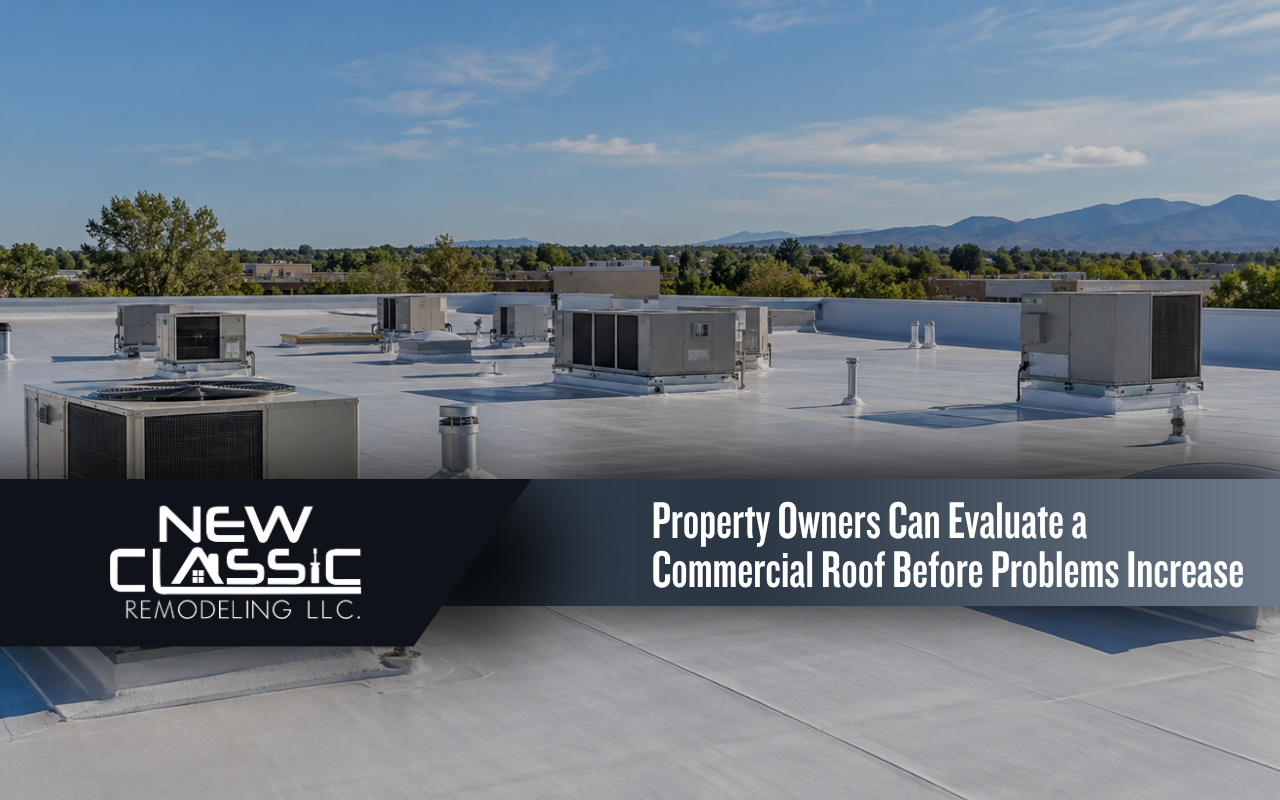
Commercial roofs should be managed as building assets, not only repaired when leaks interrupt operations. A qualified commercial roofing company can help property owners connect inspection findings, drainage, membrane condition, repair history, documentation, and capital planning. Request your roof assessment when you need a clearer picture of current condition and next priorities.
At New Classic Remodeling LLC, we bring 20+ years of excellence to roofing work, with licensed and insured service, free estimates delivered in 24–48 hours, Fairfield County, CT local expertise, and 24/7 emergency support.
Begin With a Roof Asset Record
Collect installation dates, warranty documents, repair invoices, photos, leak history, coating records, and previous inspection reports. This history can reveal whether issues are isolated or recurring.
Property managers should also record rooftop equipment changes because new penetrations and service traffic can affect the membrane.
Use Drainage Performance as an Early Condition Indicator
Standing water, clogged drains, slow scuppers, and debris at low points can accelerate wear and hide defects. Drainage should be reviewed during routine inspections, not only after a leak occurs.
Prioritize Findings by Business Impact
Schedule your commercial inspection when active leaks, saturated insulation, failing flashings, or repeated repairs begin affecting occupied areas or operations. Priority should consider both roof condition and what sits below the problem area.
Review our review preventive roof maintenance guide for ongoing planning ideas.
Use a Roof Asset-Risk Register
| Finding | Operational Impact | Moisture Risk | Repair Window | Documentation Needed | Capital Planning Effect |
|---|---|---|---|---|---|
| Open flashing | Potential interior leak | High | Prompt | Photos and repair scope | Low if localized |
| Ponding water | May limit roof life | Moderate to high | Near term | Drainage map | May require corrective work |
| Widespread membrane wear | Growing maintenance demand | Variable | Planned | Condition report | Supports replacement budgeting |
| Repeated patch failures | Recurring disruption | High | Prompt review | Repair history | May shift strategy |
Use Core Sampling or Moisture Testing When Surface Clues Are Not Enough
Surface appearance does not always reveal wet insulation or hidden deterioration. Where appropriate, testing can help define whether a localized repair is enough or a larger section is affected.
Separate Maintenance Repairs From Capital Replacement
Small defects can often be addressed as maintenance. Widespread age-related deterioration, saturated insulation, repeated seam failures, or extensive patch history may support a capital project instead.
Use Roof Coatings Only When the Existing System Is a Good Candidate
Coatings can extend service life in some cases, but they should not be used to cover trapped moisture, unstable substrates, or unresolved drainage problems.
Planning Tip: Ask what conditions were verified before a coating is recommended.
Track Contractor Access and Rooftop Service Traffic
HVAC technicians, electricians, and other trades can unintentionally damage membranes. Walk pads, access routes, and post-service inspections can reduce recurring wear.
Use Documentation to Support Budget Decisions
Photos, defect maps, repair scopes, and inspection summaries help owners explain why maintenance or replacement funding is needed.
Compare Roof Options by Building Use
Warehouse, retail, office, multifamily, and mixed-use buildings can have different access, insulation, drainage, and disruption concerns. The roof plan should reflect operations below.
Use Local Commercial Roofing Support
Our team at New Classic Remodeling LLC can help owners organize inspection findings, maintenance priorities, repair scopes, and future planning into one clearer strategy.
For local roofing work, visit our explore Fairfield roofing services page.
Use a Condition Index for Portfolio Decisions
Property owners managing several buildings can score each roof by leaks, drainage, membrane wear, repair frequency, insulation risk, and business impact. A simple index helps separate roofs that need monitoring from those requiring near-term capital planning.
Build an Annual Documentation Cycle
- Update roof drawings and equipment locations.
- Record new repairs and leaks.
- Photograph drains and high-risk details.
- Log contractor access.
- Review warranty requirements.
- Update the capital forecast.
Ask a Commercial Roofer for a Repair Strategy, Not Just a Price
A commercial roofing company should be able to explain which defects are urgent, which are preventive, which can be bundled, and what evidence supports replacement planning. That level of explanation helps managers defend budgets and reduce reactive spending.
Use Post-Repair Verification
After major repairs, confirm that drainage, flashing, seams, and affected interior areas are rechecked. Closeout photos and a written summary can make future inspections more useful.
Use Leak Mapping to Separate Recurring Problems
Create a simple floor plan showing where interior leaks have appeared and when. Then connect those locations to rooftop drains, penetrations, seams, equipment curbs, and previous repair zones.
Patterns can reveal whether repeated leaks come from one unresolved detail or several unrelated defects.
Coordinate Roofing With Other Building Trades
HVAC replacements, electrical upgrades, skylight work, and rooftop equipment projects should be coordinated with the roof plan. Trade sequencing matters because new penetrations or curb changes can affect warranties and previously completed repairs.
Set a Closeout Standard for Every Repair
Require photos, material descriptions, repair location, date, and any follow-up recommendation. Consistent closeout records make future troubleshooting faster and reduce repeated investigation costs.
Manage the Roof as a Building Asset
A strong commercial roofing company should connect inspection, documentation, maintenance, repairs, and long-term budgeting instead of treating each leak as an isolated event. Book your commercial inspection with New Classic Remodeling LLC for a practical roof plan and free estimate.
Request Your Free Estimate