
What Homeowners Should Check in a Roofing After Severe Weather
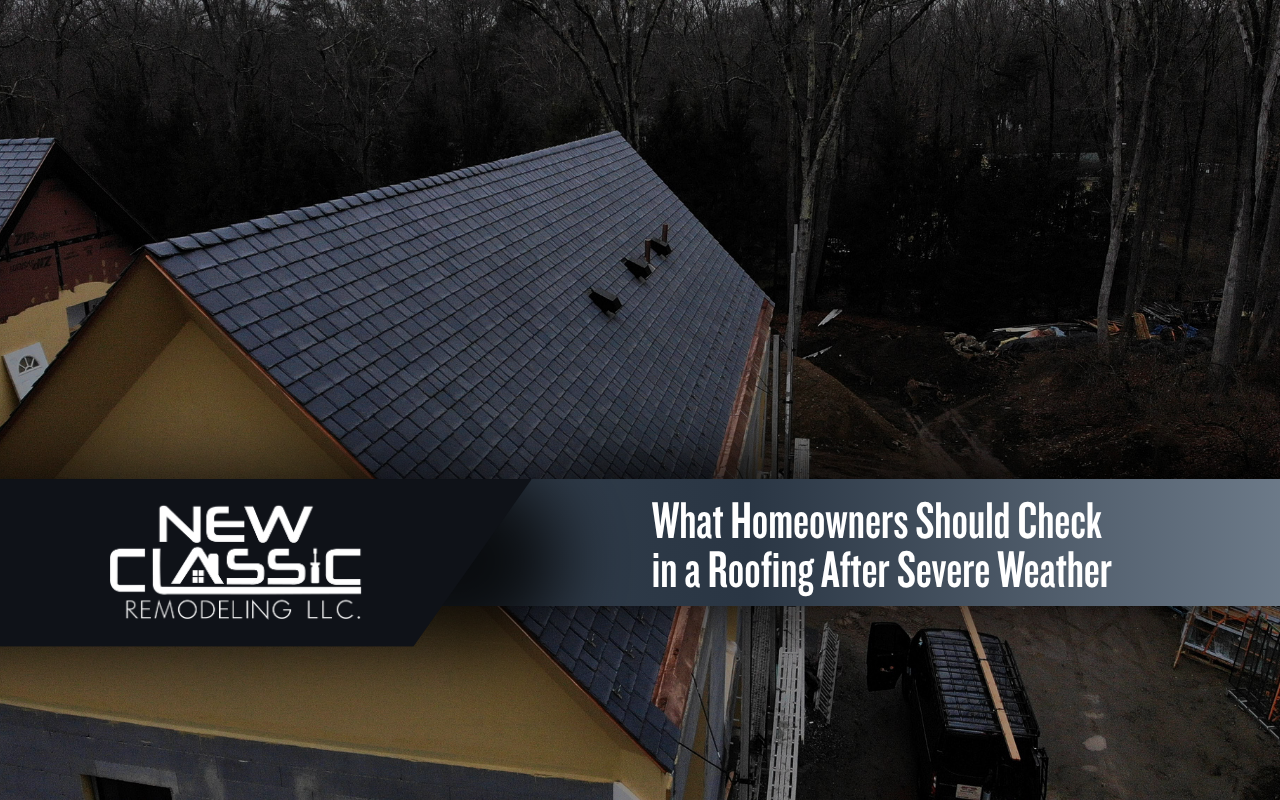
After strong wind, hail, or heavy rain, the most important first step is to protect people and the interior—not to climb onto the roof. A qualified storm damage roofing company can evaluate missing shingles, flashing, penetrations, debris impact, and leak paths from a safer position. Request your storm inspection when visible damage or interior water appears after severe weather.
At New Classic Remodeling LLC, we bring 20+ years of excellence to roofing work, with licensed and insured service, free estimates delivered in 24–48 hours, Fairfield County local expertise, and 24/7 emergency support.
Start Inside the House Before Going Outside
Check ceilings, attic access areas, upper walls, and around chimneys or vents for fresh stains, dripping, or damp insulation. Interior evidence can help identify which roof areas need closer review.
Use containers and protect belongings if water is entering, but avoid opening ceilings or touching electrical fixtures near active leaks.
Use Ground-Level Exterior Clues
From a safe location, look for missing shingles, lifted edges, fallen branches, loose flashing, damaged gutters, or roof debris on the ground. Binoculars can help without requiring roof access.
Escalate When Water Is Still Entering
Schedule your emergency assessment when leaking continues, a tree has struck the roof, large sections are missing, or structural movement is visible. Temporary protection may be needed before permanent repairs can begin.
Review our review professional inspection guidance for what a broader assessment should cover.
Use a Storm-Response Decision Ladder
| Observed Condition | Immediate Safety Action | What to Document | Professional Priority | Possible Next Step |
|---|---|---|---|---|
| Missing shingles | Stay off roof | Ground photos | Prompt inspection | Repair exposed area |
| Active leak | Protect interior | Water location and timing | Urgent | Temporary protection |
| Tree impact | Keep area clear | Impact location | Urgent | Structural and roofing review |
| Loose flashing | Avoid roof access | Visible displacement | Near term | Flashing repair |
Do Not Assume Missing Shingles Are the Only Problem
Wind can loosen shingles that remain in place, damage ridge caps, lift flashing, and affect vents or edge metal. A roof may need inspection even when only one missing shingle is visible from the ground.
Use Leak Location as a Clue, Not a Diagnosis
Water can travel along rafters, decking, or insulation before appearing inside. The interior drip point may not sit directly below the exterior defect.
Diagnostic Tip: Trace water from the highest visible moisture point before deciding where the roof failure began.
Inspect Flashing Around High-Risk Transitions
Chimneys, valleys, sidewalls, skylights, and vents are common leak areas after severe weather. Use our review roof flashing repairs guide for more detail.
Document Temporary Protection Separately From Permanent Repair
Tarping or sealing can reduce immediate water entry, but temporary work should be clearly documented so owners understand what still needs permanent correction.
Use Photos Before Cleanup Changes the Scene
Photograph roof debris, fallen limbs, damaged gutters, interior water, and visible exterior changes before cleanup when it is safe to do so.
Ask Whether the Damage Is Localized or Systemic
A few missing shingles may be repairable. Widespread uplift, repeated leaks, large hail impacts, or extensive age-related wear can change the recommendation.
Use Emergency Support Without Rushing the Permanent Scope
Our team at New Classic Remodeling LLC can help separate immediate water-control needs from the permanent repair scope so urgent action does not replace proper diagnosis.
Use a Safe Storm Checklist From the Ground
- Check ceilings and upper walls.
- Photograph missing shingles from a safe location.
- Look for gutter or flashing displacement.
- Keep away from fallen electrical lines.
- Document tree impact before cleanup.
Separate Emergency Stabilization From Insurance Documentation
Immediate work may be needed to stop water entry, but temporary repairs should still be photographed and described clearly. Keep receipts, before-and-after photos, and written scopes so later conversations have a reliable record.
Ask Whether the Roof Needs Spot Repair or a Broader Assessment
A qualified storm damage roofing company should explain whether visible damage is isolated or part of a wider pattern. Wind uplift, flashing displacement, age-related wear, and repeated leaks can change the recommendation.
Use a 48-Hour Follow-Up Check
Some leaks become visible after water travels through insulation or framing. Recheck ceilings, attic areas, and repaired zones after the next rainfall or within the following days if conditions allow.
Use a Storm Damage Photo Set That Tells the Full Story
Capture wide views of each roof slope from the ground, close views of visible damage, interior water evidence, fallen debris, and affected gutters or siding. Include a date and note about when weather occurred.
This creates a clearer record than isolated close-up images with no context.
Do Not Remove Debris That Is Still Creating a Hazard
Large branches resting on the roof may shift when moved. Keep people away from the area and coordinate removal with the roofing assessment when the branch is heavy, suspended, or near utilities.
Recheck the Attic After the Next Rain
Some leaks only appear under certain wind direction or rainfall intensity. A dry inspection immediately after the storm does not always prove the roof is watertight.
Use the next safe rainfall as a follow-up test and document any new staining or moisture.
Storm Damage FAQs
Control the Immediate Risk, Then Diagnose the Roof
A reliable storm damage roofing company should document the condition, identify the likely water path, separate temporary measures from permanent repairs, and explain the next step clearly. Book your storm inspection with New Classic Remodeling LLC for experienced guidance and a free estimate.